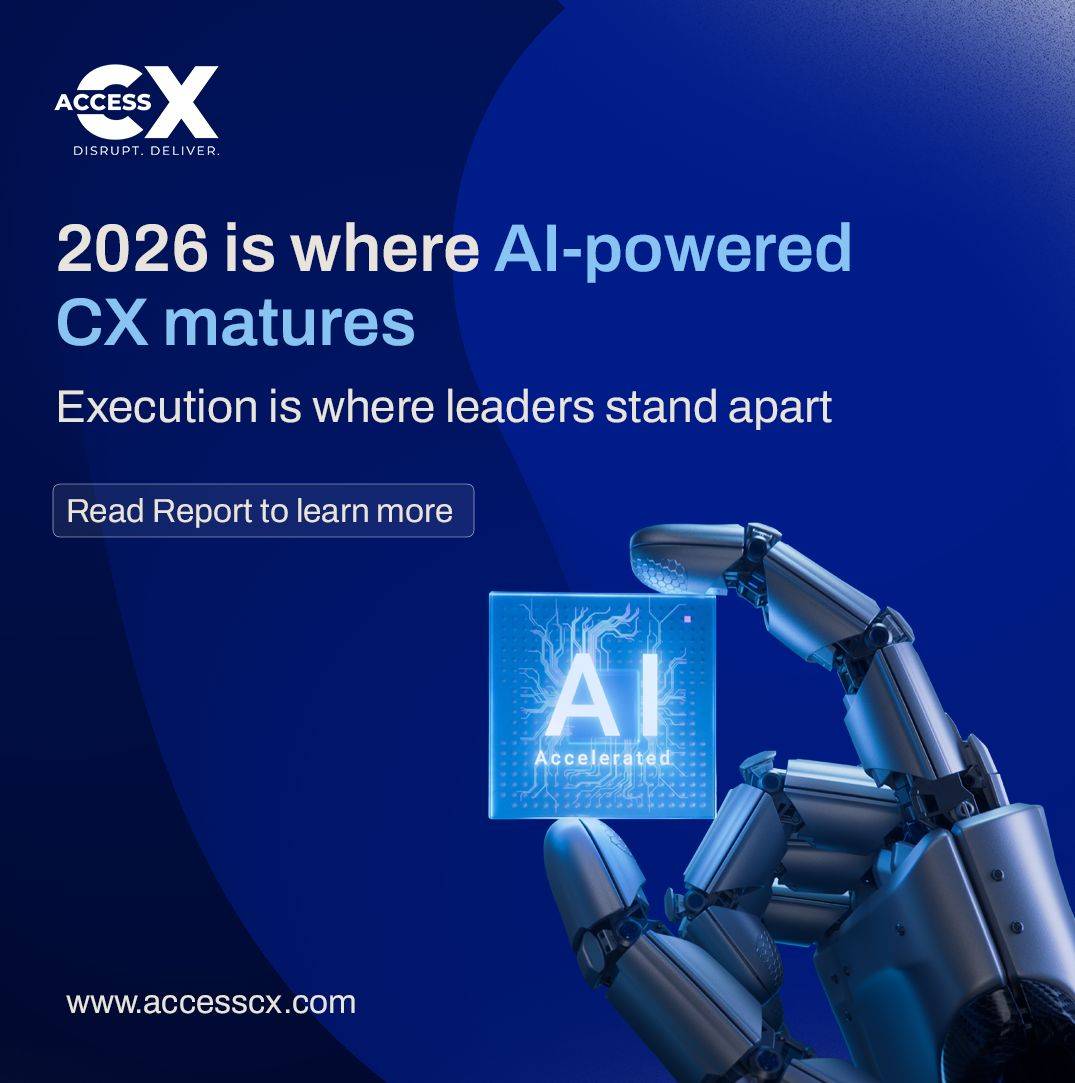
Why Agentic AI and Next Best Experience will reshape the contact centre’s purpose.
For decades, the contact centre has been the corporate paradox — a place where companies spend millions to save pennies, viewing empathy as a cost and intelligence as an afterthought.
But in 2025, a silent revolution is changing that equation.
The shift isn’t just from voice to digital, or from human to bot. It’s from reactive resolution to anticipatory orchestration — where every interaction becomes part of a living, learning system of intent.
This emerging reality stems from the integration of Agentic AI and Next Best Experience frameworks. They are redefining what it means to serve, sell, and nurture relationships in a time when every customer interaction acts as both a signal and a system event.
From Cost Centre to Cognitive Command Centre
Over the past six months, we have progressed from traditional AI to Agentic AI.
In practical terms, that means contact centers are no longer centered around triage trees and queues managed by humans; they are evolving into adaptable systems where AI agents not only sense and decide but also act in real time — not just to respond but to anticipate.
Password resets, billing errors, and claim disputes are managed by a new type of autonomous digital agents capable of executing multi-step actions safely, contextually, and in real time.
This isn’t about replacing people. It’s about removing repetition.
The future call centre workforce will not decline — it will prosper. Human agents will focus on emotional escalations, white-glove rescues, and nuanced conversations that transform recovery into retention.
In this new setup, the CX floor becomes an intelligent control centre, blending digital precision with human empathy.
The Rise of Intelligent Orchestration
The capacity to sequence engagement instead of automating it is essential.
Instead of bombarding customers with disconnected campaigns, AI engines analyze data from CRM, billing, web, app, and call logs to determine the best action, message, or gesture that will generate the highest lifetime value at that specific moment.
This turns a fragmented customer journey into a coherent story — proactively resolving billing errors, issuing goodwill gestures, and personalizing outreach through predictive models.
The outcome: increased retention, reduced churn, and renewed trust. The principle is simple but powerful: In the next era of CX, timing is the ultimate form of personalization.
Next-Gen Managed Services: From Outsourcing to Outcome-Sourcing
Here lies the opportunity and challenge for the BPO and CX managed services sector.
Traditional outsourcing models relied on labour arbitrage; the new frontier is based on intelligence arbitrage. The next-generation Managed Service Provider (MSP) must act as the connecting element between strategy, operations, and AI enablement.
These providers will not only manage customer operations; they will also fine-tune and constantly improve them.
True CX transformation occurs at the intersection of adaptive technology, re-skilled personnel, and redesigned processes — a trifecta only next-gen managed services can coordinate at scale.
Their value will depend on their capacity to:
- Translate CX strategy into operational blueprints.
- Embed AI proof-of-value pilots that can scale into enterprise-grade initiatives.
- Combine human performance data, process telemetry, and AI insights into a single view of customer health.
In this model, managed service providers evolve into AI operating partners — curating technology ecosystems, safeguarding ethical AI use, and overseeing the delicate balance between algorithmic precision and human discretion.
From Customer Journeys to Cognitive Journeys
The implications extend well beyond contact centers. As GenAI and Agentic AI become integral to enterprise operating models, the concept of customer experience broadens.
It is no longer confined to moments that matter, as CX develops into a continuous flow of micro-decisions that build trust, loyalty, and growth.
Imagine an environment where:
- Every complaint triggers an automatic self-correcting system response instead of a ticket.
- Every service lapse triggers a predictive recovery process.
- Every conversation enhances the enterprise’s experience graph, allowing it to learn, adapt, and foresee the next point of friction.
This is where critical foresight meets operational reality. The organizations that will lead are not just those that deploy AI, but those that embed AI fluency across people, processes, and partners.
The Future Managed Service Compact
In this emerging CX landscape, leadership requires a new agreement between enterprises and their managed service partners. It is no longer about service levels or cost-per-contact. It is about experience velocity, learning cycles, and trust frameworks.
The next decade will be defined not by who responds fastest, but by who learns quickest and manages that learning responsibly. The MSPs that can put this into practice — aligning executive vision with AI-enabled execution — will do more than support transformation; they will become the transformation.
The era of Next Best Experience prompts a new question for CX and BPO leaders: if your customers’ journeys are now co-created by algorithms, who in your organization is training the creators?
The winners will not be those who install AI. They will be those who institutionalize intelligence — embedding it into every decision, every dialogue, and every promise made and kept.
Because ultimately, customers don’t want to be merely managed — they want to be understood.