Access CX

Industry Insights

AI and the illusion of progress: Why Most CX Transformations Will Stall Before They Scale

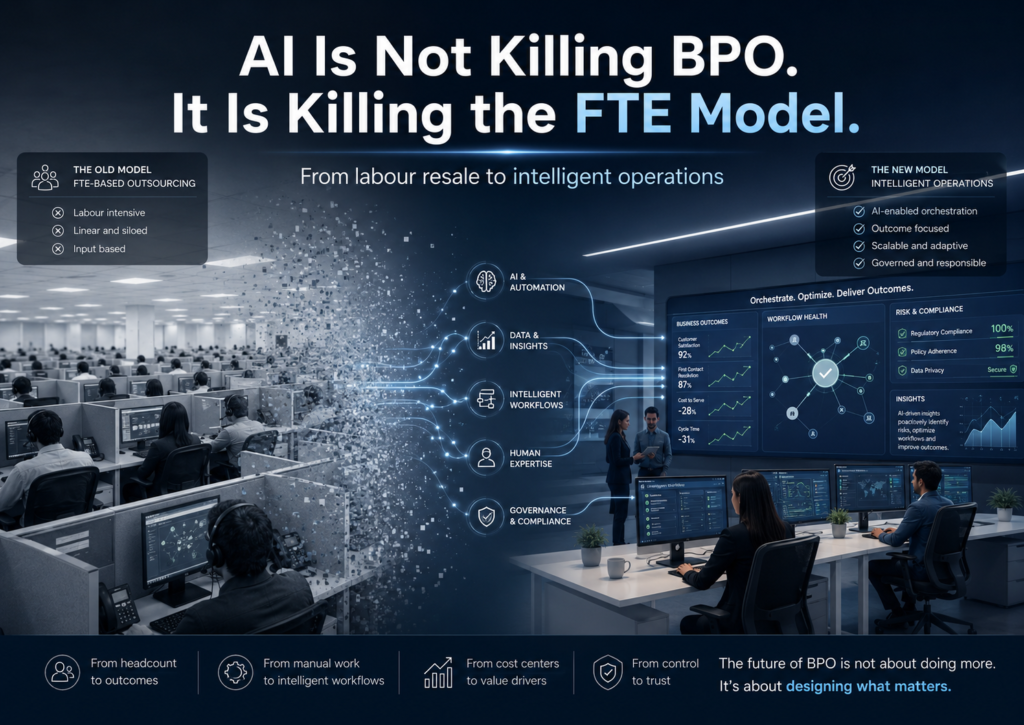
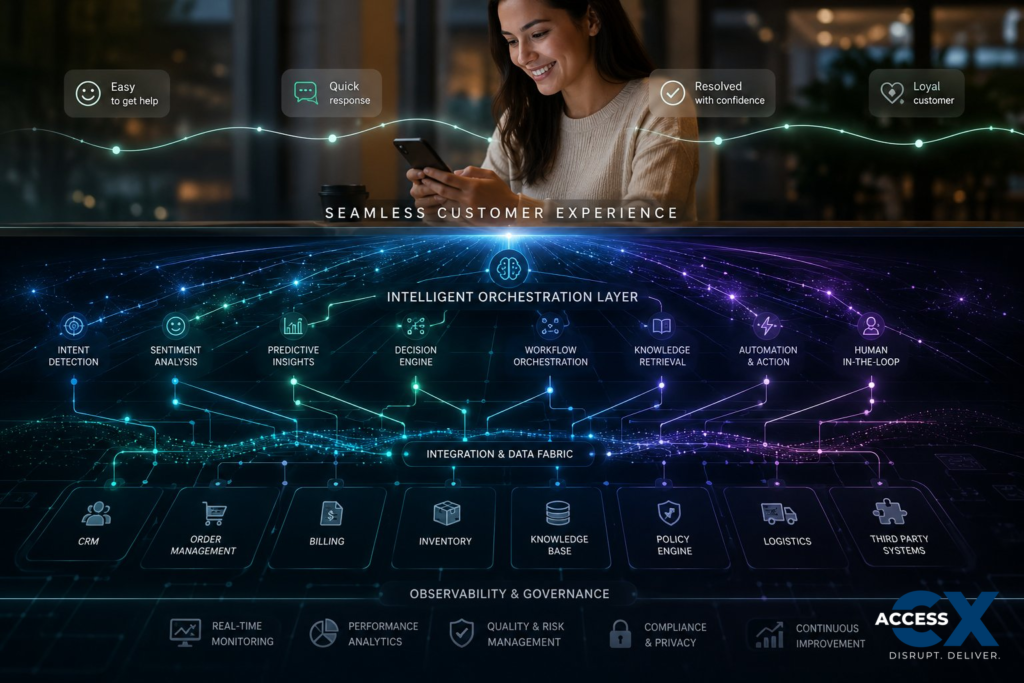
There is a dangerous illusion sweeping through customer experience today. It is the illusion of progress. Across boardrooms, AI demonstrations sparkle. Executives witness intelligent virtual agents resolving queries, voice bots navigating conversations with ease, and predictive systems guiding customer journeys with apparent precision. The promise feels immediate, and the future appears inevitable. Yet beneath the surface, a quieter reality is unfolding, one that risks derailing the next wave of CX transformation before it even begins. What we are witnessing is not yet an AI revolution. It is an epidemic of AI pilots. Unless leaders confront the structural realities behind the hype, many organizations will find themselves trapped in perpetual experimentation—impressive in demonstrations, disappointing in production, and ultimately eroding confidence rather than creating value. This widening gap between promise and reality is becoming the defining challenge for modern CX. It is the Trust Gap. And it will separate the winners from the casualties of the AI era. The Trust Gap Is Not a Technology Problem—It Is an Enterprise Problem One of the most revealing patterns across customer operations is this: AI works brilliantly in controlled environments but falters spectacularly in live production. Not because the models are weak, but because the enterprise is unprepared. Many CX leaders assume that deploying conversational or agentic AI is fundamentally a technology decision. Yet mounting evidence shows that failures are rarely due to the models themselves. They stem from fragmented knowledge, broken workflows, inconsistent processes, and legacy architectures that were never designed for intelligent orchestration. Enterprise knowledge today is scattered across repositories, permission layers, and outdated formats. In many environments, support teams rely on multiple disconnected knowledge sources—often numbering in the double digits—creating systemic complexity that AI must navigate in real time.  This fragmentation introduces what can only be described as the integration tax: the unavoidable cost of preparing the enterprise for intelligence. Here lies the uncomfortable truth: AI does not resolve operational chaos. It amplifies it. When organizations deploy AI without addressing their underlying knowledge and process architecture, hallucinations increase, reliability declines, and automation initiatives collapse under the weight of their own ambition. What began as a competitive differentiator becomes an operational liability. The Real Shift: From Deflection to Autonomous Resolution For years, the north star of customer service automation was simple: deflect tickets, reduce volume, drive customers towards self-service, and lower cost-to-serve. That era is ending. The emerging frontier is autonomous resolution—AI systems capable of executing tasks across enterprise systems, not merely suggesting answers. This shift changes everything. It transforms CX from a reactive function into an execution engine. But autonomous resolution introduces a new level of operational risk. When AI moves from answering to acting—updating accounts, issuing refunds, and scheduling services—the tolerance for error collapses. Customers may forgive a wrong answer, but they will not forgive a wrong action. Organizations that underestimate this shift will face cascading consequences: increased escalations, higher ticket volumes, and reputational damage stemming from automation failures. In the age of intelligent automation, reliability—not novelty—will determine enterprise survival. Voice AI: The New Front Door of Customer Experience While conversational chat has dominated recent discussions, voice AI is rapidly emerging as the next operational battleground. Not because it is fashionable. Because it addresses the most persistent friction in CX—human time. Voice-enabled AI systems increasingly act as invisible co-pilots during live interactions. They retrieve information in real time, anticipate customer intent, automate documentation, and guide agents through complex workflows—all while conversations are unfolding.  The implications are profound. Voice is no longer just an interaction channel. It is becoming an operational intelligence layer. Organizations deploying advanced voice-enabled workflows are already reporting measurable productivity gains, reduced idle time, and faster resolution cycles.  Yet once again, technology alone is not the differentiator. Integration is. Voice AI cannot operate effectively in fragmented ecosystems. Without seamless integration with CRM systems, knowledge repositories, and operational workflows, its promise collapses into latency, confusion, and poor customer outcomes. And in customer experience, latency is not merely a technical flaw. It is a trust-killer. The Coming Collision: Efficiency vs Trust But efficiency alone does not ensure success. In fact, the very capabilities that make AI powerful are also the ones that pose the greatest risk. As AI capabilities scale, a more complex question emerges, one that goes beyond operational metrics. What happens when efficiency begins to outstrip trust? AI systems increasingly learn from behavioral patterns, including preferences, sentiment, and interaction histories. This enables unprecedented levels of personalization. Conversations resume where they left off. Recommendations become predictive rather than reactive. Customers feel understood until they feel watched. This is the paradox of hyper-personalization. Done well, it feels like memory; done poorly, it feels like surveillance. Trust will become the central currency of the AI-driven enterprise, not speed, scale, or cost reduction. Yet trust is fragile. After repeated failures—often as few as three poor experiences—customers abandon automation altogether, returning to human-assisted channels and driving costs back up.  The Hidden Risk: AI Will Reshape Workforce Logic Before Leaders Are Ready Much of today’s AI conversation centers on technology, but the deeper disruption will occur within the workforce itself. AI is not replacing agents; it is redefining them. In the emerging operating model, every human interaction becomes both a service event and a learning loop. AI systems analyze conversational patterns, sentiment shifts, and resolution outcomes—transforming everyday interactions into operational intelligence.  This introduces a new form of workforce augmentation, not automation. Amplification. Agents become orchestrators of intelligence rather than executors of routine tasks. Yet this transition demands something many organizations have not yet prepared for: behavioral transformation at scale. Training programs designed for legacy workflows will not suffice. Leaders must redesign role definitions, incentive structures, and performance metrics. Otherwise, technology adoption will outpace human readiness, and productivity will stall. The Rise of Next-Generation Managed Service Providers And this is precisely where many organizations encounter their greatest limitation—not technological capability, but execution capacity. Amid growing complexity, a new category of enterprise partner is emerging. Not traditional outsourcing providers. Not pure technology vendors. Something more deliberate

AI and the illusion of progress: Why Most CX Transformations Will Stall Before They Scale Read More »

AI Won’t Save Your Call Centre — But It Can Transform It

The call center industry is entering its most seductive phase. Every conference stage promises autonomous agents. Every board deck forecasts cost compression. Every demo showcases frictionless journeys. Yet beneath the excitement, a harder truth is emerging: AI alone will not transform customer experience. Data discipline, operating models, and organizational courage will. Organizations that treat AI as a shortcut often end up automating noise. Those who treat it as an operating transformation will reshape customer trust. And the gap between the two is widening fast. The Original Constraint of AI in CX AI is built on human-generated data. Human systems are imperfect. This is not a technical observation. It is a strategic one. Customer experience environments are shaped by decades of fragmented CRM records, inconsistent service histories, overlapping product catalogs, and tribal knowledge buried in agent notes. When AI models learn from fragmented systems, they don’t create clarity. They amplify inconsistency. That is why early CX automation often fails quietly: bots answer confidently but incorrectly;routing engines send the wrong technician; sales AI generates persuasive but inaccurate content; and forecasting tools misinterpret churn signals. The industry calls these “edge cases.” CX sees them as breaches of trust. None of this is because CX leaders have failed. Call centers have spent decades optimising for scale, compliance, and cost under intense commercial pressure. The systems we inherited were never designed for real-time intelligence. Today’s leaders are navigating a structural shift, not a technology upgrade. The Data Mirage in Call Centres and BPOs Across industries, leaders repeatedly face the same issues: duplicate records, inconsistent item descriptions, incorrect contact data, fragmented service histories, and telemetry signals that never translate into customer insights. These are not IT problems. They are CX issues. Because the next wave of CX automation is not about chatbots. It is about decision intelligence: predicting churn before the call, diagnosing product faults remotely, routing technicians with precision, and personalising conversations in context. These capabilities depend on integrated, trusted data ecosystems. Many call centers are still building them, while many BPOs inherit fragmented environments from multiple clients and legacy platforms. This is not a criticism. It is the reality of how CX evolved. The False Promise of “AI First” A dangerous narrative is taking shape in boardrooms: Deploy AI first. Fix processes later. But AI cannot fix a broken operating model. If CX strategy is fragmented across marketing, sales, service, field operations, and outsourcing partners, AI simply automates that fragmentation. Consider the real-world use cases emerging today: intelligent dispatching that avoids unnecessary truck rolls, telemetry-driven remote diagnosis, anomaly detection in work orders, and revenue forecasting from integrated CX analytics. These are operating model transformations. They require data architecture reform, process redesign, workforce enablement, and governance frameworks. AI is an accelerator — not a substitute for transformation. The Coming Divide in CX Over the next five years, CX organizations will diverge into three broad archetypes. Automation-First Adopters briefly improve efficiency but see loyalty stagnate. Operational Integrators invest in journeys, governance, and selective AI use cases. Trust grows steadily. CX Intelligence Architects treat CX as an enterprise intelligence system. Service, product, analytics, and field data form a learning loop. AI predicts needs, prevents failures, and personalizes engagement. These CX Intelligence Architects will shape the next decade of customer experience through operational discipline, not solely through technology. The Rise of the CX Managed Intelligence Partner Traditional outsourcing models focused on labor efficiency. Traditional consultancies focused on strategy design. Traditional integrators focused on technology deployment. AI-driven CX requires all three. The next generation of CX partners must bridge: Strategy – identifying high-value AI use cases Operations – redesigning journeys People – augmenting agents Process – embedding governance Technology – delivering proof-of-value AI solutions Many BPO leaders are already pioneering hybrid human-AI models, digital talent academies, and analytics capabilities. The future belongs to partners who can move from concept to measurable CX improvement in weeks, not years. Why CX Needs Human-First AI AI still requires vision, curated knowledge, integration, exception handling, and continuous improvement. It cannot run itself. And in customer experience, this matters deeply. The best AI systems will not eliminate agents. They will elevate them — giving real-time insight, contextual history, predictive next-best actions, and emotional intelligence cues. The contact center becomes an intelligence hub, not a cost center. The Strategic Question CX and BPO Boards Must Ask When AI becomes table stakes, what becomes competitive advantage? Not algorithms. Not scale alone. Not cost alone. But proprietary customer understanding. Organizations that integrate service data, product telemetry, behavioral insights, and field intelligence into a unified customer understanding will lead their industries. What CX and BPO Leaders Should Focus on Now The organizations that will benefit most from AI are not those deploying the most pilots. They are those building the strongest foundations. Data governance is CX strategy. Operating models matter more than models.AI value comes from integration, not experimentation. The real ROI from AI in CX comes from reduced churn, fewer repeat contacts, lower field-service costs, faster revenue cycles, improved cross-sell conversion, and higher customer lifetime value. AI in CX is a growth and resilience strategy, not just an efficiency program. The Real Frontier of Customer Experience AI will not save call centers overnight. But it can transform them — if leaders treat it as part of a broader reinvention of customer experience. The organizations that succeed will not be those with the most bots. They will be those who learn faster than their customers’ expectations evolve. That frontier is arriving sooner than most organizations expect.

AI Won’t Save Your Call Centre — But It Can Transform It Read More »

From Contact Centres to Cognitive Enterprises: The Quiet Collapse of an Operating Model

For more than four decades, the contact centre has been engineered as an industrial machine. Forecast demand. Optimize schedules. Script interactions. Measure handle time. Contain costs. The human agent was positioned as both interface and engine—absorbing variability, resolving exceptions, and bearing the emotional burden of scale. AI was first welcomed into this world as a tool. Automation to handle volume. Analytics to improve reporting. Bots to shave seconds. But something far more destabilizing is now unfolding. The contact centre is no longer being augmented. It is being cognitively re-architected. What is emerging is not a smarter stack of tools but a different class of system altogether—one in which interaction handling, workforce orchestration, quality assurance, performance coaching, and experience optimization converge into a continuously learning whole. Not software. Operating intelligence. Once cognition enters the core, the contact centre ceases to be a function. It becomes a sensing organ within the enterprise nervous system. Nervous systems do not optimize cost. They shape behavior. The End of Reactive Service Most service environments are still structured around lag. Customers act. Systems respond. Leaders analyze what has already happened. Agentic AI collapses that sequence. When every interaction is interpreted in real time, when sentiment is continuously modeled, when demand is forecast behaviorally rather than historically, and when next-best actions are dynamically generated, service stops being a response mechanism and becomes predictive. This is the quiet shift from customer service to customer choreography. In such a model, interactions are no longer isolated events. They are signals in motion. Each conversation updates the organization’s understanding of risk, intent, effort, emotion, and opportunity. Each moment feeds into routing, experience design, workforce planning, and even product and policy logic. The contact centre becomes less like a queue and more like a sensing organ. Strategically, this challenges one of the deepest assumptions in CX and BPO: that service scale must be paid for with human variability. When cognition is embedded in the operational flow, variability itself becomes something the system learns from—not something leaders merely absorb. This is where service stops being a cost structure and becomes an adaptive capability. The Disappearance of the “Average Agent” One of the least discussed consequences of this shift is the erosion of the middle. When systems can observe, interpret, guide, coach, and quality-assure every interaction, the notion of an “average” agent becomes structurally irrelevant. Performance is no longer sampled; it is continuously shaped. This creates a bifurcation. On one side, routine interaction handling increasingly shifts to machine-led flows. On the other, human roles move upwards into judgement, exception handling, emotional resolution, ethical discernment, and complex orchestration. What begins to disappear is the large middle tier of semi-scripted labour that defined traditional call centers and fueled the BPO scale model. This is not primarily about workforce reduction. It is a workforce phase-change. The strategic question for leaders is no longer “How do I automate calls?” It is: what is the future economic role of human capability in a system that can already perceive, decide, act, and learn? The organizations that answer this early will redesign talent architectures, incentives, and operating rhythms to leverage humans rather than rely on human volume. Those that delay will find themselves running increasingly sophisticated platforms with progressively thinner human meaning. Three Futures Emerging from the Same Technology What makes this moment strategically dangerous is that the same underlying capabilities can yield radically different futures. In one future, enterprises double down on efficiency. They build near-autonomous service engines optimized for throughput, containment, and cost extraction. CX becomes technically impressive yet emotionally thin. BPOs become infrastructure utilities. Trust becomes fragile. Differentiation erodes. In a second future, service functions evolve into adaptive experience systems. AI handles scale, while humans are deliberately redeployed into higher-order roles: behavioral insight, relationship repair, contextual judgement, and cross-functional sense making. Here, CX becomes a strategic intelligence function. Contact centers become experience laboratories. BPOs become co-design partners. In a third, more disruptive future, the contact centre dissolves as a category. Cognitive service capabilities are embedded across the enterprise—within products, operations, risk, and ecosystems. Interaction is no longer a place customers go. It is something the organization continuously delivers. Which future unfolds is not determined by technology. It is determined by who architects the operating model. Why Next-Generation Managed Service Providers Will Shape the Outcome Traditional managed services were designed to absorb labour, standardize processes, and enforce operational discipline. That model is misaligned with current requirements. The emerging environment demands partners who can operate across three planes simultaneously. Strategic: helping leaders redesign service not as a function but as a behavioral and economic system—integrating it into enterprise strategy, growth logic, and risk posture. Operational: re-engineering CX environments to operate as learning systems, where workflows, roles, and governance continuously evolve as cognitive capability expands. Technological: rapidly standing up high-potential, proof-of-value AI solutions that are not left as pilots but deliberately engineered as operational building blocks—embedded into workforce planning, interaction handling, quality systems, and decision flows. This is not IT outsourcing. It is operating-model co-creation. The managed service provider of the next decade will not primarily sell seats, scripts, or software layers. It will provide translational capability: converting emerging AI potential into institutional practice across people, processes, and technology. They will sit between ambition and execution, between boards and operations, between models and moments. Critically, they will own not just delivery but also design responsibility. The Strategic Risk Leaders Are Underestimating Most CX and BPO strategies still assume the future will be an extension of the past: more channels, smarter bots, better analytics, leaner operations. The evidence points elsewhere. When systems can orchestrate demand, interpret emotion, assure quality, coach performance, and recommend action as an integrated whole, the unit of competition shifts. It is no longer the contact centre. It is the enterprise’s capacity to learn from interaction. Those who industrialize that capacity will move faster than markets, not just respond to them. Those who do not will optimize a structure that no longer confers an advantage. The provocation for

From Contact Centres to Cognitive Enterprises: The Quiet Collapse of an Operating Model Read More »

From AI Adoption to Experience Engineering: The CX Shift That Will Define 2026

By 2026, customer experience will no longer be defined by how much AI an organization deploys—but by what it consistently delivers. Most enterprises will report “AI in CX.”Far fewer will operate AI-native CX models capable of producing measurable outcomes at scale. This marks a structural shift in the industry:CX is moving from automation to experience engineering. What’s driving the change isn’t technology availability—it’s executive accountability. Boards are no longer funding experimentation without impact. The question has shifted from “Where is the AI?” to “Where is the value?” Six forces are reshaping CX operating models: The implication is clear:CX success in 2026 will be defined less by efficiency gains and more by repeatable, trusted business results. Organizations that engineer CX for outcomes will pull ahead.Those that only layer AI onto legacy models will struggle to close the gap. Explore what AI-native CX really requires – Click to Download the PDF

From AI Adoption to Experience Engineering: The CX Shift That Will Define 2026 Read More »