The Contact Centre Is Optimising the Wrong Future
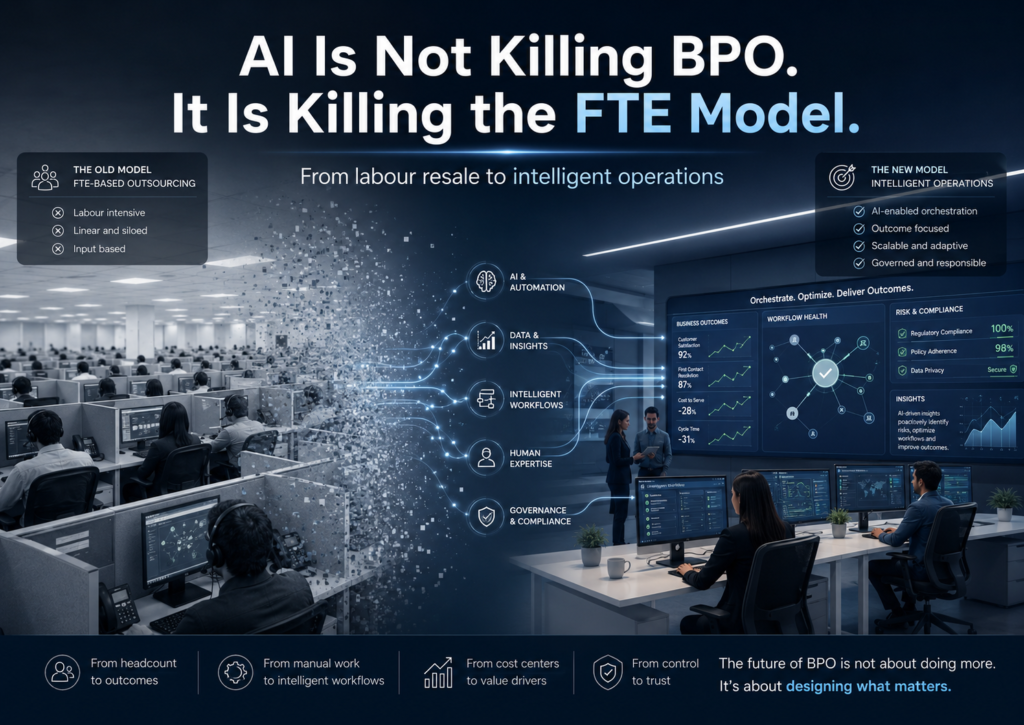
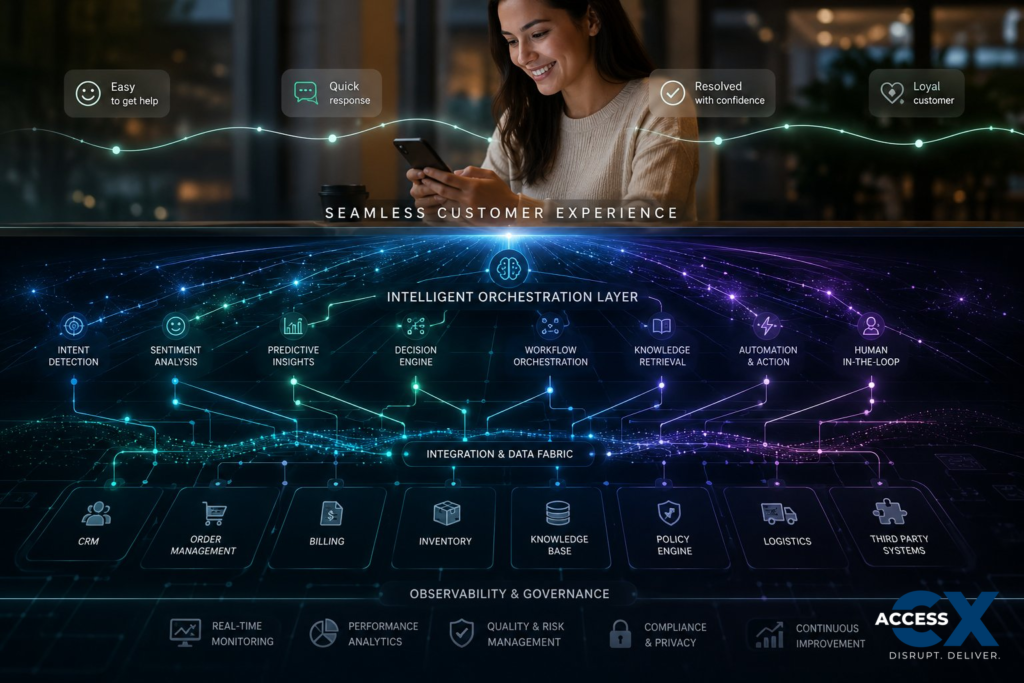
For decades, the contact centre has been improving at answering the same fundamental question: How efficiently can we handle customer demand? We built workforce models around it. Technology stacks around it. Outsourcing contracts around it. Dashboards around it. Average handle time. Service level. First-contact resolution. Occupancy. Quality. CSAT. Cost per contact. The industry became highly sophisticated in managing the arrival, routing, handling and measurement of interactions. There is only one problem. The next era of customer experience may not be about managing interactions more effectively. It may be about making many of them unnecessary. That distinction changes almost everything. The dashboard can tell you what happened. The customer can tell you why. One of the most significant implications of generative AI is not conversational automation at all. It is our newfound ability to listen. For years, contact centres have sat on one of the richest sources of customer intelligence within the enterprise: millions of conversations that reveal what customers are struggling with, which processes are failing, where products are confusing, where promises are being broken, and where unnecessary effort is being created. Yet we reduced much of that intelligence to categories, disposition codes and satisfaction scores. A CSAT score can tell us whether somebody was satisfied with an interaction. It cannot necessarily tell us whether the interaction should never have happened. The distinction matters. AI-enabled interaction analytics can now analyse large volumes of conversations, detect emerging patterns, interrogate customer intent and sentiment, identify root causes, and connect apparently isolated complaints to systemic problems. What might appear as a handful of complaints, when conversations are analysed collectively, can reveal an operational problem that can then be addressed upstream. That is not simply better reporting. It changes the purpose of customer operations. Operational metrics do not disappear. They become hygiene factors rather than the strategic definition of success. The bigger prize is understanding and changing the conditions that created the demand. Instead of asking, How did the contact centre perform yesterday?, leaders can increasingly ask: Why did these customers need us at all? And eventually: What could we change so they don’t need us tomorrow? AI can automate the old model. That doesn’t make it a new model. This is where the current AI conversation turns uncomfortable. Much of the industry is deploying AI to speed up familiar tasks. Summarise the call. Assist the agent. Automate quality. Deflect the contact. Generate the response. Reduce after-call work. Each can create genuine value. There is nothing wrong with optimisation. However, optimisation and transformation are not the same thing. Organisations naturally use new technology to do yesterday’s work faster, cheaper and at greater scale. The greater opportunity is to use AI to do things the organisation could not do before. That means the strategic question is no longer simply where AI fits within today’s operating model. It is whether today’s operating model survives AI. Because a contact centre designed primarily around queues, channels, cases and labour capacity reflects an era when customers initiated service and organisations responded. We are moving towards something different. Connected data, predictive analytics and AI can increasingly detect intent, identify risk, anticipate failure, recommend an intervention and, potentially, take action before the customer even enters a queue. The emerging ambition is therefore not merely more personalised service but anticipatory service — moving from efficient reaction to intelligent intervention. That does not mean predicting everything. Nor should every interaction be automated. The greatest value may lie in identifying the relatively small number of moments when timely intervention materially changes the customer’s outcome. The operating philosophy shifts from contact handling to customer orchestration, raising an uncomfortable question for BPO. An economic contradiction sits beneath this transformation. Imagine an outsourcing partner being paid primarily for people, seats, interactions or transactional activity. Now ask that partner to aggressively reduce interactions, automate tasks, redesign processes and reduce the human capacity required to perform them. The more successful it is, the more effectively it can cannibalise its own revenue model. That is not fundamentally a technology problem. It is a commercial-model and incentive problem. The traditional BPO model is unlikely to disappear. Human capability, specialist expertise, scalability and geographic delivery will remain highly important. However, the basis on which value is created — and increasingly contracted for — is likely to change. The emerging opportunity is to move beyond selling capacity to helping clients continuously improve the economics and quality of customer operations. That means the BPO of the future may increasingly resemble a transformation partner, a capability platform and a managed-services provider rather than simply an outsourced contact centre. The winners will not necessarily be those with the most agents. They may be those that can orchestrate the most effective combination of human capability, AI, workflow, intelligence, and operational redesign. The workforce does not disappear. Its purpose changes. That also renders the simplistic debate about whether AI will replace agents increasingly unhelpful. A growing share of routine work will be automated. Some roles will disappear or shrink; others will be redesigned, and entirely new combinations of human and machine work will emerge. Productivity expectations will shift. But customer operations will still involve ambiguity, emotion, exceptions, vulnerability, commercial judgement and circumstances in which customers simply need another human being. The more useful question, then, is not whether it is human or AI. It is which work should be performed by whom — and why? The emerging model is hybrid. AI absorbs repetitive activity, searches for knowledge, analyses conversations, supports decision-making, and increasingly performs clearly bounded tasks. Humans focus on judgement, complex problem-solving, relationship-building, handling exceptions, and the moments when trust matters most. AI is almost like a new employee: give it a defined role, train it, monitor its performance, refine it, and gradually expand its responsibilities rather than attempting to transform the entire operation at once. That is a useful antidote to another problem afflicting the industry: AI theatre. Leaders do not need another hundred AI demonstrations. They need evidence that a specific intervention improves an
The Contact Centre Is Optimising the Wrong Future Read More »