Access CX

Blog

LAM

LARGE ACTION MODELS: REVOLUTIONIZING CUSTOMER EXPERIENCE IN CALL CENTERS AND BPOS

Welcome to the Large Action Models (LAMs) Era The rapid evolution of artificial intelligence has heralded a new milestone: the era of Large Action Models (LAMs). While earlier advancements in AI focused on data processing and understanding, LAMs signify a shift towards autonomous decision-making and task execution. With their ability to plan, reason, and act, LAMs are transforming industries at an extraordinary pace, particularly in customer service and business process outsourcing (BPO).  A Timeline of AI Evolution Toward LAMs  From Language to Action: What Distinguishes LAMs Traditional AI tools, such as large language models (LLMs), have demonstrated remarkable proficiency in understanding and generating text. These tools form the foundation for chatbots, virtual assistants, and content generation systems. However, their capabilities are limited to passive interactions; they can suggest or offer guidance but cannot perform actions. LLMs go beyond comprehension by integrating advanced reasoning, planning, and action-execution capabilities.  For example, while a chatbot based on an LLM may inform a customer about the available phone plans, a system powered by an LAM could enhance this by identifying the best plan according to the customer’s usage patterns, initiating the upgrade, updating the billing system, and confirming the change—all without human intervention. This ability to perform end-to-end tasks positions LAMs as transformative in customer-facing industries. Strategic Business Considerations for LAM Adoption Although LAMs offer significant potential, their implementation necessitates strategic planning to ensure sustained business value. Key factors to consider include:  Assessing the success of LAM requires organisations to use performance metrics, including cost savings, improvements in customer satisfaction, and increases in operational efficiency. Improving Call Center Operations with LAMs A Structured Execution Framework for LAM Integration. For successful LAM deployment, businesses should embrace a systematic approach:  Managed Services Interventions: The Role of People, Processes, and Technology A successful LAM deployment necessitates alignment among people, processes, and technology.  Critical Risks, Challenges, and the Competitive Landscape The Future of CX with LAMs Integrating LAMs into call centers and BPOs signifies a new era for customer experience. By automating routine tasks, enhancing personalisation, and ensuring consistent service quality, LAMs empower businesses to exceed customer expectations while optimising operational efficiency.  As LAM adoption accelerates, businesses that embrace this technology will be well-positioned to lead in an increasingly competitive customer experience landscape. Imagine a call center where routine tasks are resolved in seconds and personalized support is available around the clock—a reality made possible by LAMs.  A Call to Action for Call Centers and BPO’s The LAM era has arrived, and BPOs and contact centers must act swiftly to align their digital transformation strategies.  Businesses should: ✅ Evaluate AI Preparedness and Strategic Alignment.   ✅ Utilize advancements in open-source artificial intelligence.  ✅ Revise workflows to improve collaboration between AI and humans.   ✅ Create a framework for governance and compliance in AI deployment.  The future of customer experience is intelligent, proactive, and underpinned by artificial intelligence—LAMs will be vital in facilitating this transformation.

LARGE ACTION MODELS: REVOLUTIONIZING CUSTOMER EXPERIENCE IN CALL CENTERS AND BPOS Read More »

CX: Elevating

AI IN CUSTOMER EXPERIENCE: ELEVATING ENGAGEMENT OR REPLACING THE HUMAN TOUCH?

The AI Paradox in Customer Experience  Artificial Intelligence (AI) is a transformative force in customer experience (CX) and contact centres. It improves efficiency, lowers costs, and facilitates hyper-personalised customer interactions. However, amid the enthusiasm, a persistent debate continues: Is AI truly enhancing the customer experience, or is it eroding the human touch that defines exceptional service?  The outcomes have been polarising as companies swiftly integrate AI-powered chatbots, virtual assistants, and automated workflows. On one hand, AI-driven insights and automation create seamless customer experiences; on the other, poorly executed AI can frustrate customers, leading to a loss of trust and dissatisfaction. Where should companies draw the line between automation and human intervention?  The Promise of Proactive AI-Driven Customer Experience  Traditionally, customer service has been reactive, with agents responding to customer inquiries and complaints. However, AI has introduced a proactive service model, enabling businesses to anticipate and resolve issues before customers are even aware of them. AI-driven predictive analytics analyse customer behaviour, identifying potential churn risks and service problems before they escalate.  For example, companies such as Amazon and IBM utilise AI to predict their customers’ needs. AI can analyse historical data, identify trends, and suggest actions before problems arise. This approach enhances customer satisfaction while lowering operational costs by minimising the volume of incoming queries.  The Reality: AI Adoption Challenges in CX  Despite its potential, AI-driven CX is not a magic bullet. Many organisations struggle with AI implementation due to:  A key question for call centres is whether AI can genuinely replace human empathy or if it should act as a supplementary tool.  AI as an Enabler, Not a Replacement: The Synergy between Humans and AI  The fear of AI replacing human agents is widespread; however, the reality is more nuanced. AI does not aim to replace agents; instead, it should enhance their capabilities, enabling them to concentrate on high-value, complex interactions.  AI tools like Agent Assist, AI-generated Knowledge Bases, and Sentiment Analysis enable human agents to work more efficiently:  New Roles Emerging in AI-Enabled Contact Centres  With AI handling routine tasks, contact centre roles are evolving. New positions such as:  This raises another important question: Are call centres making sufficient investments in upskilling their workforce, or will AI widen the digital divide in employment?  Execution Framework: Implementing AI for Measurable Impact  1. AI Strategy Development: Before implementing AI, organisations require a clear CX roadmap:  2. Execution: How AI Enhances CX Operations: Businesses integrating AI into customer experience operations must focus on:  This raises an important question: Are businesses investing in AI as a long-term strategy to enhance customer experience, or are they merely pursuing short-term cost savings?  Managed Services & Change Management: The Human Element in AI-Driven CX  1. Change Management: Avoiding the AI Backlash  One of the most significant risks associated with AI adoption is employee resistance. Organisations must proactively address AI scepticism by:  2. Managed AI Services: Optimizing AI Deployment  Many organisations lack the expertise required to manage AI-driven customer experiences. A managed AI service may help overcome this:  The Future: AI-Only CX vs. Hybrid AI-Human Models  As we look to the future, agentic AI (AI systems that communicate with one another) is expected to further automate customer service. Will we witness a future entirely dominated by bots, with AI managing everything—from inquiries to resolutions? Or will businesses recognise that AI is most effective when used alongside human agents?  Undoubtedly, AI is transforming customer experience; however, companies must be intentional about its implementation. The cornerstone of success in AI-driven customer experiences lies in:  Businesses that adopt an AI strategy prioritising human needs will thrive in the evolving landscape of digital customer experience. The future of AI in customer experience is not about replacement but rather about reinvention. 

AI IN CUSTOMER EXPERIENCE: ELEVATING ENGAGEMENT OR REPLACING THE HUMAN TOUCH? Read More »

Davos 25 AI

Building Intelligent Economies: Davos 2025 and the Inclusive Future of AI

How AI and reskilling are reshaping industries, societies, and global collaboration. The World Economic Forum Annual Meeting 2025 in Davos illuminated a critical juncture in the evolution of artificial intelligence (AI). Leaders across industries, academia, and government came together to discuss a new era defined by scalable AI, the need for workforce reskilling, and the dawn of Artificial General Intelligence (AGI). With AI increasingly integrated into the global economy, the challenge is clear: harness its transformative power while ensuring inclusive growth and societal equity. AI as a Driver of Intelligent Economies: Scaling AI Across Industries Leaders in sectors such as healthcare, energy, and consumer goods shared tangible use cases that demonstrate AI’s potential to drive both efficiency and innovation: The Dawn of AGI: Discussions on AGI underscored its transformative yet uncertain potential. Experts cautioned against the risks of agentic AI—autonomous systems capable of operating without human oversight—emphasizing the need for strict regulations and ethical frameworks to mitigate potential harm. The Reskilling Revolution: Empowering the Workforce for the Intelligent Age Bridging Skill Gaps: The Reskilling Revolution initiative, now in its fifth year, is on track to upskill a billion people by 2030. Key insights include: Innovative Approaches: Toward Inclusive AI Ecosystems: Blueprint for Intelligent Economies The newly launched “Blueprint for Intelligent Economies” outlines a roadmap for equitable AI adoption. Its core pillars include: Technology Equity: Leaders emphasized the urgency of addressing the digital divide. As AI evolves, ensuring access to technology for underserved regions and populations is essential to prevent further socioeconomic disparities. Programs to engage marginalized communities underscored AI’s role in fostering economic mobility. Read-through for BPO and Call Center Industries The Business Process Outsourcing (BPO) and call center industries, long synonymous with labor-intensive operations, stand at a transformative crossroads with AI adoption accelerating. Key takeaways from Davos discussions shed light on both challenges and opportunities: The BPO sector’s sustainability depends on its ability to blend the efficiency of automation with the irreplaceable human touch, ultimately redefining itself as a hub of value-driven, adaptive services. Observations on Responsible AI Development Building trust in AI requires Final Thoughts: Davos 2025 underscored that the Intelligent Age is as much about empowering people as it is about advancing technology. AI’s promise lies not only in revolutionizing industries but in building inclusive economies that uplift all members of society. As the world transitions from experimentation to scaled adoption, the focus must remain on collaboration, equity, and shared prosperity. For BPOs and call centers, this means cultivating a workforce that seamlessly collaborates with AI and embodies the perfect blend of efficiency and empathy. The ultimate question is not whether AI will replace jobs but how we can reimagine industries to harness its potential for human creativity and value creation.

Building Intelligent Economies: Davos 2025 and the Inclusive Future of AI Read More »

DigitalTransform

Leading Digital Transformation: A People-Centric and Sensemaking Journey

In today’s fast-paced digital landscape, organisations face relentless disruption. Technologies like artificial intelligence (AI) and generative AI offer immense potential. Yet, over 80% of digital transformations fail—not because of technology but because organisations underestimate the critical roles of leadership, culture, and strategy. Successful transformation requires more than tools; it demands visionary leaders who inspire people, lead through uncertainty, navigate complexity, and align innovation with long-term goals. The real challenge for senior leaders is making sense of a hyper-connected and rapidly evolving environment. This raises many questions. How can they guide their organisations through disruption and uncertainty? How can they harness technology to deliver value? Most importantly, how do they inspire people to see transformation as an opportunity rather than a threat? Making Sense of Transformation Digital transformation is too often reduced to a race for the latest technologies. True leaders understand that transformation is about reimagining business models, processes, and cultures to meet evolving customer and market demands. Technology alone doesn’t create a competitive advantage; it must align with the organisation’s mission, values, and strategy. Leading through uncertainty is essential. With shifting global dynamics and emerging risks, leaders must anticipate change, explore future possibilities, and foster environments where teams feel empowered to experiment and innovate. This requires robust scenario planning, a culture of adaptability, and psychologically safe environments where collaboration thrives despite uncertainty. Sensemaking allows leaders to cut through the noise, interpret market dynamics, and chart a clear path forward. By focusing on what matters most—delivering value to customers and aligning teams around a shared purpose—leaders move from reactive decision-making to confident, deliberate action. Transformation then becomes a strategic journey, not a fragmented response to disruption. At the heart of this journey is a commitment to people. While technology enables change, people drive it. Leaders must understand what motivates their teams, anticipate resistance, and foster a shared sense of purpose. Middle management plays a pivotal role, bridging the gap between strategy and execution to ensure transformation reaches every level of the organisation. In the digital era, the most effective leaders are orchestrators. They create conditions for innovation to flourish, empowering employees to experiment, iterate, and grow by fostering environments where teams feel safe taking measured risks. These leaders unlock creativity, trust, and resilience, which are essential for meaningful change and transformation. Reimagining High Performance To achieve sustainable transformation, organisations must rethink how they support people, performance, and culture. As workplace expectations evolve, leaders must foster environments that promote innovation, inclusion, and collaboration. This is about reimagining high performance—empowering people to perform at their best while evolving business models to maximise value. Leaders face two challenges: enabling continuous learning and aligning employees with the organisation’s mission. They must create atmospheres where innovation thrives and individuals feel connected to the business’s broader goals. Investing in lifelong learning ensures employees are prepared for change while promoting cultural adaptability builds resilience in the face of disruption. Trust is foundational. Leaders build environments where experimentation is celebrated and failure is reframed as a step toward growth. Leaders unlock creativity and resilience by empowering employees to test ideas and iterate, driving performance that thrives amid disruption. Creating a Sustainable Competitive Advantage It’s easy to mistake digital transformation for a race to adopt new digital tools. However, true competitive advantage lies in using technology strategically to create value. Leaders must consider how to enhance personalised services, improve customer experiences, or solve complex business challenges. Technology alone doesn’t drive transformation, but it can be instrumental in enabling it. Competitive advantage comes from applying technology to reinvent business models, drive innovation, and empower people. Leaders who align digital initiatives with customer needs and organisational goals can build stronger relationships, personalise services, and differentiate their organisations in the marketplace. Strategic alignment is critical. Transformation efforts must directly support broader business objectives and adapt as market and organisational conditions evolve. This requires constant feedback from teams and customers, a willingness to refine strategies, and clear communication about how technologies augment—not replace—roles. Empowering Employees Through Training, Transparency, and Collaboration For digital transformation to succeed, employees must feel empowered by change, not threatened by it. Leaders play a critical role in demystifying the transformation process. Clear communication about how emerging technologies will augment—not replace—employees’ roles is essential. Leaders must also involve employees in identifying where and how technology can help them work smarter, not harder. Investing in training and development is essential. Middle managers, in particular, need tools to interpret complex scenarios, make informed decisions, and guide their teams effectively. By fostering a culture of continuous learning, leaders ensure employees remain agile and adaptable as they navigate change. Breaking down silos is another priority. Transformation efforts often fail when departments operate in isolation. Leaders must take deliberate steps to create collaborative environments that align business units, IT, and stakeholders around shared goals. Customers don’t care about internal divisions; they expect seamless, value-driven experiences. Leaders must prioritise customer-centric collaboration, ensuring innovation delivers measurable organisational impact. Prioritising the customer experience unifies the organisation with a clear purpose. Leading Digital Transformation Digital transformation is not a one-time initiative but an ongoing process of learning and adaptation. The future depends on leaders thinking strategically, acting decisively, and inspiring their teams to embrace change. Transformation thrives when leaders make sense of complexity, align people around a shared vision, and create environments where employees feel empowered to innovate. In an era of relentless change, visionary leaders don’t just adapt to disruption—they anticipate it, shape it, and thrive in it. By leading through uncertainty, reimagining performance, and seizing the digital advantage, they ensure their organisations don’t just survive—they define the future.

Leading Digital Transformation: A People-Centric and Sensemaking Journey Read More »

Navigating AI’s Promise: Unlocking Potential in BPOs and Call Centers

Every day, a new foundation model or cutting-edge AI application emerges, captivating the tech industry and business leaders alike. Generative AI, in particular, has reached a fever pitch, with CEOs clamoring to understand how these transformative technologies can reshape their industries. However, the reality for most enterprises is far more complex. While tech vendors race to push the boundaries of what’s possible, those tasked with deploying and deriving value from AI within their organizations must navigate a treacherous terrain. Two AI Races: Sprint vs. Marathon According to Gartner, AI has two distinct races: a high-stakes sprint among tech vendors and a grueling marathon within enterprises. The former is a frenzied competition to unveil the next breakthrough, while the latter is a carefully plotted journey to deliver tangible business outcomes. For those running the internal AI race, the path is anything but straightforward, with many leaders grappling with the disconnect between the promise of AI and the realities of implementation. Productivity Gains: A Nuanced Reality One of the biggest challenges is achieving productivity gains. While AI promises unprecedented efficiency, the reality is far more nuanced. Generative AI’s productivity boost depends heavily on job complexity and employee experience. Junior team members often see significant benefits, such as faster problem resolution. However, seasoned employees who have honed their skills over the years may find limited value in these tools. For higher-complexity roles, the impact flips. An experienced attorney, for example, can leverage AI to amplify their expertise. This uneven distribution forces organizations to rethink their approach, focusing on “deep productivity zones” where job complexity and employee experience align to unlock true potential. Even then, time saved doesn’t always translate into tangible business benefits. Gartner has observed the so-called “productivity leakage,” where employees use their newfound free time for personal activities rather than high-impact work. Understanding these dynamics is critical for delivering meaningful productivity gains. The Cost and Technology Challenges Costs remain a significant challenge. Generative AI investments are unpredictable, and Gartner estimates potential cost projection errors of up to 1,000%. From inference costs to data preparation expenses, the variables are numerous, and the risks of overspending are high. This necessitates a shift in the approach to proof of concepts and pilot projects. Rather than simply testing technical feasibility, organizations must examine cost structures to understand how expenses scale in real-world deployments. Treating proofs of concept as proofs of value ensures that organizations make informed decisions before committing to full-scale implementation. Technology presents its own challenges. As AI becomes embedded in enterprise applications, the traditional tech stack has given way to a more complex, multi-layered architecture. On the one hand, organizations have structured data and centralized AI models managed by IT. On the other hand, unstructured data and departmental AI applications are popping up across the organization, often without IT’s approval. This shift demands a new approach to data management and application governance. Instead of meticulously cleaning and structuring every dataset, organizations leverage generative models to make sense of messy, unstructured data. However, this flexibility comes with challenges, such as managing data access and permissions to ensure security and compliance. BPOs and Call Centers: A Case Study in AI’s Potential These dynamics are particularly relevant for business process outsourcing (BPO) firms and call centers. AI has the potential to revolutionize customer service by enhancing agent productivity and improving resolution times. Yet, the uneven distribution of AI benefits presents unique challenges. AI assistance can be transformative for junior agents, enabling them to handle queries faster and more accurately. However, the impact may be limited for seasoned agents with deep expertise. Understanding these nuances is critical for BPOs and call centers. By identifying deep productivity zones and aligning AI deployment with job complexity and experience, they can unlock the full potential of these technologies. For instance, targeted AI tools can help less experienced agents excel while enabling senior agents to focus on higher-value tasks. Navigating the treacherous terrain of enterprise AI requires a clear focus on outcomes. Whether running at a steady pace or accelerating toward ambitious goals, success hinges on aligning AI investments with business needs, managing costs intelligently, and building a robust yet flexible technology environment. Charting Your AI Journey with Purpose The journey may be challenging for BPOs, call centers, and enterprises alike. However, the rewards are transformative. The opportunity is to unlock AI’s true potential to improve processes and customer experience, drive productivity, and open new avenues for growth. This requires a thoughtful, focused approach. Start by pinpointing areas where AI can have the most significant impact—those “deep productivity zones” where job complexity and employee experience align. Use targeted pilot projects to test and refine AI strategies, ensuring they deliver measurable outcomes while keeping costs in check. Carefully monitor AI-related expenses, especially during proofs of concept, to understand how costs will scale as you expand. Treat these early experiments as both technical trials and opportunities to evaluate real-world value and long-term feasibility. Above all, align your AI initiatives with your organization’s needs and priorities. Balance ambition with practicality and focus on delivering meaningful productivity, customer experience, and efficiency improvements. By starting small, making data-driven decisions, and scaling strategically, BPOs and call centers can confidently navigate the challenges of enterprise AI and position their organizations as leaders in innovation. The time to act is now. Take the first step toward building a smarter, more efficient future.

Navigating AI’s Promise: Unlocking Potential in BPOs and Call Centers Read More »

GenAI

Generative AI: A General-Purpose Technology with Real-World Impact

2024 marked a whirlwind of advancements and adoption for Generative AI, cementing its place as a technological transformative force. From creating highly realistic content to reshaping how industries operate, Generative AI captured global attention with its unprecedented capabilities. Businesses, educators, and policymakers scrambled to understand and harness its potential while debates about its ethical use, societal impact, and long-term implications dominated public discourse. The past year showcased the astonishing power of Generative AI, but it also underscored the importance of managing this technology responsibly to maximize its benefits for humanity. In today’s digital era, the buzz around “Generative AI” has transitioned from niche tech communities to mainstream discussions. With its ability to transform creativity, reshape industries, and redefine productivity, Generative AI is emerging as more than just another technological breakthrough. It can become the defining general-purpose technology (GPT) of the 21st century. But what exactly is Generative AI? How does it compare to past transformative GPTs, and how is it already applied in the real world? What is Generative AI? Generative AI refers to artificial intelligence systems designed to create content—text, images, videos, music, or even code—by learning from patterns and structures in existing data. This process relies heavily on large, high-quality training datasets and significant computational resources to achieve accuracy and sophistication, making these factors essential components of Generative AI systems. Unlike traditional AI models that analyze patterns or make predictions, Generative AI produces novel outputs. It’s akin to teaching machines to be creative, a skill once thought uniquely human. At the heart of this technology are advanced neural networks, particularly Generative Adversarial Networks (GANs) and Transformer models. GANs work through a system of competition: a generator creates data while a discriminator evaluates its authenticity. This iterative process allows the generator to improve over time, refining its outputs based on feedback from the discriminator. Transformers, like OpenAI’s GPT, process data sequences to generate coherent and contextually relevant content. These models enable applications ranging from AI-generated art to lifelike voice synthesis and automated software development. Generative AI as the Next General-Purpose Technology Economists typically divide technologies into two categories: single-purpose tools and general-purpose technologies (GPTs). While single-purpose tools excel in specific tasks, GPTs—like electricity, the steam engine, or personal computers—revolutionize multiple industries and reshape economies and societies. Generative AI is poised to join this elite group. Jeffrey Ding, a professor at George Washington University, has documented the transformative impact of past GPTs in his book Technology and the Rise of Great Powers. Drawing on historical case studies of past industrial revolutions and statistical analysis, Ding develops a theory that emphasizes institutional adaptations oriented around diffusing technological advances throughout the economy. His research reveals that the most significant driver of economic growth during these periods was the broad diffusion of GPTs across sectors. In the digital age, the mechanisms of diffusion have evolved dramatically. Unlike earlier GPTs, which relied heavily on physical infrastructure, Generative AI leverages cloud computing, digital platforms, and global connectivity to achieve widespread adoption. These advancements enable faster scaling across industries while introducing challenges such as ensuring equitable access to resources and addressing digital divides. This new paradigm demands a shift in strategies for promoting diffusion, focusing on accessibility, infrastructure, and digital literacy. The same principle applies to Generative AI. To reach its full potential, nations and industries must focus on widespread adoption rather than just cutting-edge innovation. This requires strategies that include investment in skills, public trust, and equitable access to AI technologies. Real-World Applications of Generative AI Generative AI is already making a tangible impact across industries, showcasing its versatility as a GPT. Its applications are vast and growing rapidly, from optimizing processes to creating new possibilities. Call Centers: Call centers are leveraging Generative AI to revolutionize customer service. AI-powered systems handle routine inquiries, allowing human agents to focus on complex issues. Advanced AI models generate real-time suggestions for agents during calls, enhancing efficiency and accuracy. These tools also provide detailed analytics, helping businesses improve response strategies and customer satisfaction while reducing operational costs. Healthcare: The healthcare industry is leveraging Generative AI to accelerate innovation and improve patient outcomes. AI-powered tools assist diagnostics by analyzing medical imaging and patient data to identify diseases earlier and more accurately. Pharmaceutical companies use generative models to simulate molecular structures, speeding up drug discovery and reducing costs. In addition, AI-driven virtual assistants provide personalized patient support, improving access to healthcare services. Retail and Marketing: Retailers are tapping into Generative AI to enhance customer experiences and optimize operations. AI creates personalized marketing content, tailoring advertisements and recommendations to individual preferences. Virtual assistants powered by Generative AI improve customer service by delivering faster, more accurate responses. Additionally, AI tools help retailers manage inventory by predicting demand and optimizing supply chains. Financial Services: In the financial sector, Generative AI automates repetitive tasks, such as drafting earnings reports, analyzing regulatory changes, and summarizing meeting notes. However, these systems are not without limitations. They may generate outputs that lack context or contain inaccuracies, especially when dealing with nuanced or ambiguous information. Therefore, human oversight remains critical to ensure the reliability and quality of these automated processes. This allows professionals to focus on strategic decision-making. AI is also used to detect fraudulent activities and assess risks, enhancing the security and efficiency of financial systems. Manufacturing: Generative AI is revolutionizing design and production in manufacturing. Companies use AI to create optimized designs, predict maintenance needs, and streamline production processes. AI systems can detect inefficiencies or potential failures by analyzing machine-generated data, reducing downtime and increasing operational efficiency. This application is particularly transformative for sectors like automotive and aerospace, where precision and reliability are critical. Creative Industries: Generative AI is transforming creative fields such as art, music, and entertainment. Artists use AI tools to create unique pieces of art, composers create new musical compositions, and filmmakers develop scripts and visual effects. These applications accelerate the creative process and open up new possibilities for artistic expression. Challenges to Overcome Despite its immense potential, adopting Generative AI as a

Generative AI: A General-Purpose Technology with Real-World Impact Read More »

How AI is Redefining Appointment Management and Customer Experience in Healthcare

In today’s healthcare landscape, efficient appointment management is a cornerstone of delivering high-quality care and ensuring patient satisfaction. Delays, inefficiencies, and poor communication in the scheduling process can lead to patient frustration, increased operational costs for providers, and diminished trust in the healthcare system. Fortunately, artificial intelligence (AI) is stepping in as a transformative force, optimizing appointment management and elevating the overall customer experience (CX) through intelligent, real-time solutions. The healthcare journey often begins with scheduling an appointment, and the importance of getting this right cannot be overstated. Proper appointment management ensures that healthcare resources—staff, equipment, or facilities—are utilized to their fullest potential. It reduces wait times, prevents overcrowding, and ensures that each patient receives care in a timely manner. Conversely, inefficiencies in this process can disrupt workflows, compromise care quality, and leave patients feeling undervalued. The stakes are high, and it is here that AI demonstrates significant potential. Personalizing Patient Care Through AI-Driven Scheduling AI offers many innovative tools, that are fundamentally reshaping appointment management. For example, intelligent systems can automate repetitive tasks like assigning time slots, sending reminders, and confirming bookings. By analyzing historical data, resource usage patterns, and patient preferences, these systems generate optimized schedules that reduce errors and improve efficiency. When emergencies or delays arise, AI dynamically adjusts schedules in real time, ensuring minimal disruption and maintaining patient care. One of AI’s standout contributions is its ability to personalize the scheduling experience. By analyzing patient medical histories, clinical priorities, and individual preferences, AI ensures that appointments are tailored to each patient’s needs. This improves the quality of care and fosters a sense of trust and respect between patients and healthcare providers. Transforming Customer Experience with AI-Enhanced Communication But AI’s influence doesn’t stop at scheduling. It also plays a critical role in transforming the broader customer experience. One of the most exciting developments is the use of real-time translation tools. These systems enable healthcare providers to break down language barriers, allowing patients to communicate in their preferred language during appointments, consultations, and interactions with CX agents. This capability is particularly valuable in diverse communities where linguistic differences have historically been a barrier to access. Another area where AI is making significant strides is in enhancing the efficiency of customer support interactions. AI provides real-time prompts that guide customer service agents during patient interactions, offering actionable suggestions to resolve queries quickly and empathetically. These prompts ensure that patients receive accurate, thoughtful responses while reducing the cognitive load on CX agents. AI also enhances voice interactions by reducing background noise and neutralizing accents, enabling clear and seamless communication—a critical factor in high-stakes healthcare conversations. AI’s ability to act as middleware further underscores its transformative impact on healthcare operations. By integrating data from various touchpoints—such as appointment systems, patient records, and customer service platforms—AI provides healthcare administrators comprehensive visibility into their operations. This holistic view enables detailed reporting on response times, resolution rates, and patient satisfaction scores. With these insights, healthcare organizations can identify trends, optimize workflows, and make data-driven improvements to enhance the patient experience. Consider the practical applications of AI in action. Virtual assistants and chatbots provide instant responses to patient queries, reducing administrative burdens on healthcare staff. Online booking systems powered by AI allow patients to schedule appointments 24/7, accommodating their busy schedules and modern preferences for self-service. These systems create a seamless and efficient experience. Patients experience shorter wait times, more precise communication, and greater convenience, contributing to higher satisfaction and trust. Healthcare providers, on the other hand, enjoy improved resource utilization, reduced operational costs, and the ability to scale services to meet growing demand. AI’s role in healthcare is poised to expand even further. Predictive analytics will enable providers to anticipate patient needs and operational challenges before they arise, allowing for proactive management. AI systems will also become more integrated with electronic health records (EHRs), streamlining data sharing and enhancing the personalization of care. These advancements and AI’s real-time capabilities promise a future where healthcare is more accessible, efficient, and patient-centered. AI in Healthcare: Transforming Today, Innovating for Tomorrow AI is not merely an upgrade to existing systems; it is a game-changer that redefines what is possible in appointment management and customer experience. By automating processes, enabling real-time solutions, and providing actionable insights, AI empowers healthcare providers to deliver efficient and empathetic care. For patients, it offers a seamless, personalized journey from the moment they book an appointment to the completion of their care. As the healthcare industry continues to embrace these technologies, the future of patient experience is set to reach unprecedented heights.

How AI is Redefining Appointment Management and Customer Experience in Healthcare Read More »

AccessCX_Lessons from Cybersecurity's Weakest Links

Lessons from Cybersecurity’s Weakest Links

Welcome to the latest edition of our Access CX Cybersecurity Series, where we explore the dynamic world of digital security threats and the vulnerabilities that often make headlines, as well as those that remain under the radar. The scenario is all too common: in 2023, a large U.S. healthcare provider fell prey to a ransomware attack, exposing millions of patient records. The breach wasn’t due to sophisticated hacking techniques but something much simpler—a phishing email. One employee’s trust in a deceptive company memo led to massive financial losses and a significant loss of public trust. This event highlights a stark truth: technology alone isn’t enough to safeguard organizations. The human element continues to be the most vulnerable aspect of cybersecurity, affecting businesses, sectors, and personal security alike. In this piece, we’ll dissect the most exploited vulnerabilities, backed by real-life scenarios. From poor password practices to advanced social engineering, these narratives stress the need for a proactive, human-focused cybersecurity strategy. We’ll also outline practical steps to turn these vulnerabilities into strengths, helping organizations not just respond to threats but anticipate them. At Access CX, we’ve seen time and again how human errors become entry points for cyber threats in organizations of all sizes. Here are some key vulnerabilities and lessons learned: The Cost of a Click: Human Error The 2020 Twitter hack serves as a notorious example where teenagers accessed high-profile accounts by tricking employees into revealing their login details over the phone. This shows even trained staff can err under duress. Organizations need to move beyond basic training to engaging, regular sessions, like simulated phishing attacks, to sharpen employees’ vigilance. Tricked by Trust: Social Engineering In 2022, a European energy firm’s CEO was duped into transferring $240,000 following a call from what he thought was his superior, only to find out it was a deepfake voice. This case illustrates how far attackers will go. Teaching staff (and family) to verify urgent requests through multiple methods can thwart such scams. The “AI and the Future of Us” special by ABC highlighted another chilling example where AI was used to mimic a child’s voice to extort money from a concerned parent, underlining the importance of awareness in the AI era. Passwords: The Achilles’ Heel The 2019 data breach at a major U.S. retailer, where hackers accessed millions of credit card details due to reused, weak passwords, underscores the need for stronger password policies. Implementing passphrases and multi-factor authentication (MFA) could have prevented such incidents. Outdated Systems: A Gateway for Attackers The WannaCry ransomware attack in 2017 exploited unpatched Windows systems, causing chaos in organizations worldwide. This incident stresses the critical need for timely software updates and patch management. The Insider Threat A case where an employee at a financial institution attempted to steal data on a USB drive showcases the risks from within. Tight data access controls and behavioral monitoring can help detect and prevent insider threats. Too Much Access: Misconfigured Permissions In 2021, a U.S. government contractor mistakenly exposed sensitive documents due to misconfigured cloud settings. Proper configuration management and the principle of least privilege are essential to prevent such oversights. A Gap in Knowledge Small businesses often install advanced security tools but overlook training. One accounting firm lost $50,000 after an employee fell for a phishing scam. Ongoing, tailored education is crucial to make employees a first line of defense. The Path Forward Cybersecurity isn’t solely a tech issue; it’s deeply human. Here’s how organizations can fortify their defenses: · Empower Employees: Educate and train to spot and handle threats. · Enforce Strong Authentication: Implement MFA across all access points. · Stay Updated: Keep systems and software patched. · Monitor and Audit: Regularly check for unusual activities and permissions. By addressing these human vulnerabilities, businesses can enhance their security posture. At Access CX, we focus on building a culture of awareness and resilience. Ready to Strengthen Your Cybersecurity Defenses? Today’s digital threats demand a comprehensive approach where human factors are central. At Access CX, we’re committed to helping you identify vulnerabilities, educate your team, and deploy robust solutions. Contact us today to discuss how we can protect your organization and empower your team against cyber threats. Let’s work together to forge a safer, smarter digital future. contact@accesscx.com

Lessons from Cybersecurity’s Weakest Links Read More »

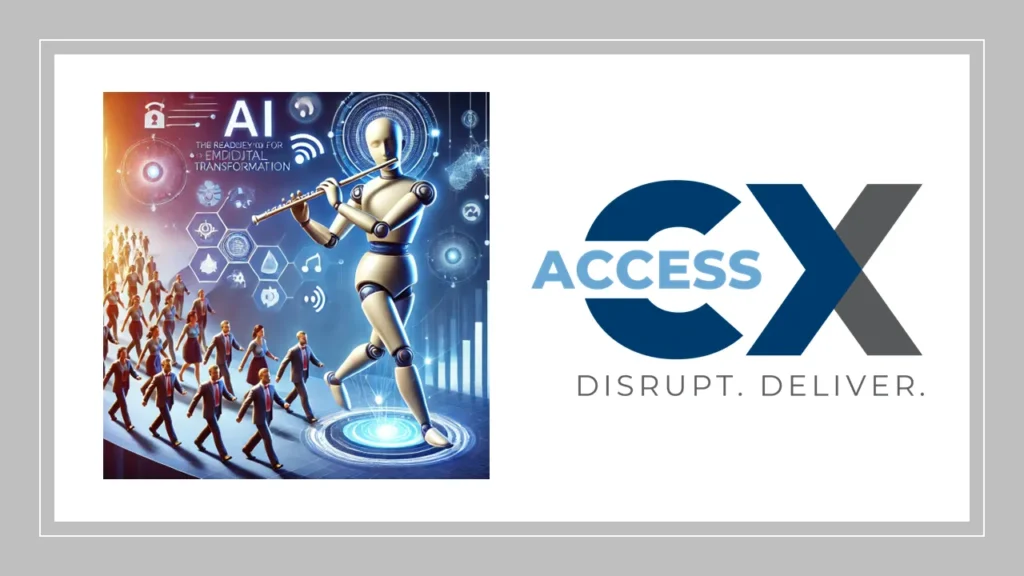
The Readiness of Employees for AI-Driven Digital Transformation in Customer Experience

As businesses increasingly prioritize digital transformation, Artificial Intelligence (AI) has emerged as a key component in enhancing customer experience (CX). Companies are eager to leverage AI to personalize customer interactions, automate processes, and gain deeper insights from data. However, the successful integration of AI is contingent on the readiness of employees to adopt and adapt to these new technologies. Employee Readiness: The Foundation of Successful AI Integration AI technology can revolutionize how companies interact with customers, but without a workforce prepared to implement and utilize these tools, the benefits may not be fully realized. Despite the promise of AI, many organizations find themselves grappling with a significant skills gap. According to industry research, a large number of companies feel their employees are not adequately equipped to work alongside AI systems, which poses a barrier to digital transformation. Employee readiness involves more than just technical skills. It encompasses understanding how to collaborate with AI, making data-driven decisions, and embracing a culture of continuous learning and adaptation. Without a comprehensive strategy to prepare employees, companies may struggle to harness the full potential of AI. Challenges Facing Companies Organizations looking to integrate AI into their CX strategies often encounter several challenges, including: Bridging the Gap: Leveraging External Expertise The good news is that companies do not need to face these challenges alone. Strategic advisory partners like Access CX offer solutions to help businesses accelerate their digital transformation by providing specialized services that address each stage of AI integration. Here’s how Access CX can support companies in overcoming obstacles and driving successful AI adoption: Accelerating Digital Transformation Without Overwhelming Your Team AI adoption does not have to be a slow, complex process. With the right partnerships, companies can accelerate their digital transformation journey without overwhelming their teams. Access CX brings the expertise needed to ensure a smooth transition, enabling employees to embrace new technologies with confidence. Through training programs, workshops, and ongoing support, Access CX helps businesses build a culture of continuous learning and adaptability, preparing employees to thrive in an AI-driven environment. Conclusion The integration of AI into customer experience strategies represents a tremendous opportunity for companies to differentiate themselves in an increasingly competitive market. However, the success of these initiatives largely depends on employee readiness and the ability to adapt to new technologies. Companies that lack the necessary resources or expertise can turn to strategic partners like Access CX to guide them through the transformation process. With a focus on consulting, technology integration, and managed services, Access CX empowers companies to adopt AI seamlessly, minimize risks, and achieve their digital transformation goals. By leveraging external expertise, businesses can not only accelerate their efforts but also ensure they are equipped to meet the demands of a rapidly evolving digital landscape.

The Readiness of Employees for AI-Driven Digital Transformation in Customer Experience Read More »

AI in the Workplace: Addressing the Uncontrolled Rise of “Bring Your Own AI”

In today’s fast-evolving digital landscape, Artificial Intelligence (AI) is reshaping industries and redefining how work gets done. Companies that have embraced digital transformation are leveraging AI to automate tasks, improve decision-making, and enhance customer experiences. However, for many organizations that have not yet embarked on their digital transformation journey, there is a growing disconnect: even though the company may not have integrated AI into its operations, it is very likely that its employees have already started using AI tools on their own. This phenomenon, often referred to as “Bring Your Own AI” (BYOAI), presents both opportunities and risks. The Rise of “Bring Your Own AI” AI tools have become more accessible than ever. From chatbots like ChatGPT to automation software and data analytics platforms, employees can easily adopt AI solutions to streamline their workflows, boost productivity, and solve problems creatively. This accessibility has led to a growing trend where employees introduce AI tools into their daily tasks without the organization’s oversight or formal integration. For example: While these AI tools can help employees work more efficiently, the use of unapproved and unsupervised AI solutions can introduce significant risks for companies that haven’t officially embraced AI. The Risks of an Uncontrolled Approach to AI The lack of a structured, controlled approach to AI in the workplace can lead to several critical issues:  Data Security and Privacy Concerns  When employees independently use AI tools without organizational oversight, sensitive company data could be exposed. Many AI applications, particularly those that are cloud-based, may not adhere to the same security standards as the company’s internal systems. This can lead to unintended data breaches, data leaks, or misuse of proprietary information. For example, if employees are inputting sensitive customer information into an AI platform, there is a risk of violating data privacy regulations and exposing the company to legal liabilities. Compliance Issues Uncontrolled use of AI can also lead to compliance challenges. In sectors such as finance, healthcare, and legal services, companies must adhere to strict regulations regarding data handling and privacy. When employees use AI tools without proper oversight, it’s possible to unknowingly violate these regulations, which can result in hefty fines and damage to the company’s reputation. Without a centralized AI policy, it’s difficult for companies to ensure that the AI tools employees are using are compliant with industry standards and legal requirements. Inconsistent Quality and Performance AI tools can be powerful, but they need to be implemented correctly to deliver consistent and reliable results. When employees bring their own AI tools to work, there is no guarantee that these tools have been properly vetted for quality and performance. This can lead to inconsistencies, errors, or inefficiencies that could harm the company’s productivity and output. Furthermore, relying on untested AI solutions can lead to situations where inaccurate data or results are used to make critical business decisions. Lack of Integration and Scalability One of the benefits of officially integrating AI into a company’s operations is the ability to ensure that all tools and systems work seamlessly together. In a BYOAI environment, employees might be using different AI solutions that don’t integrate well with the company’s existing systems. This can create data silos, reduce collaboration, and limit the scalability of AI solutions across the organization. Without a cohesive strategy, companies miss out on the opportunity to build a streamlined, efficient AI ecosystem. Intellectual Property Risks AI tools can sometimes involve sharing company data or proprietary information with external platforms, which can inadvertently lead to intellectual property risks. For example, if an employee uses an AI tool to develop a new marketing strategy or product idea, it’s possible that this information could be stored or analyzed by a third-party platform, leading to potential breaches of confidentiality agreements or loss of competitive advantage. Why Companies Need a Structured AI Strategy For companies that have not yet begun their digital transformation, the rise of BYOAI should serve as a wake-up call. It is no longer a question of if AI will impact the business, but how. Companies need to proactively address the use of AI in the workplace by developing a structured AI strategy that provides clear guidelines for how AI tools can be used. Key Steps to Develop a Controlled Approach to AI Conclusion The growing trend of “Bring Your Own AI” reflects the fact that employees are eager to leverage AI to improve their work, even if their organizations haven’t yet fully embraced digital transformation. While this enthusiasm for AI presents an opportunity, it also exposes companies to risks related to data security, compliance, and performance. To harness the benefits of AI without falling into potential pitfalls, companies must take a proactive approach by developing a structured, controlled AI strategy that aligns with their overall business goals. At Access CX, we help companies navigate the complexities of digital transformation by providing strategic advisory services that ensure smooth and secure AI integration. If your company is ready to take control of AI and drive transformation, reach out to us today to learn how we can help you on this journey at contact@asccesscx.com.

AI in the Workplace: Addressing the Uncontrolled Rise of “Bring Your Own AI” Read More »